John Adams
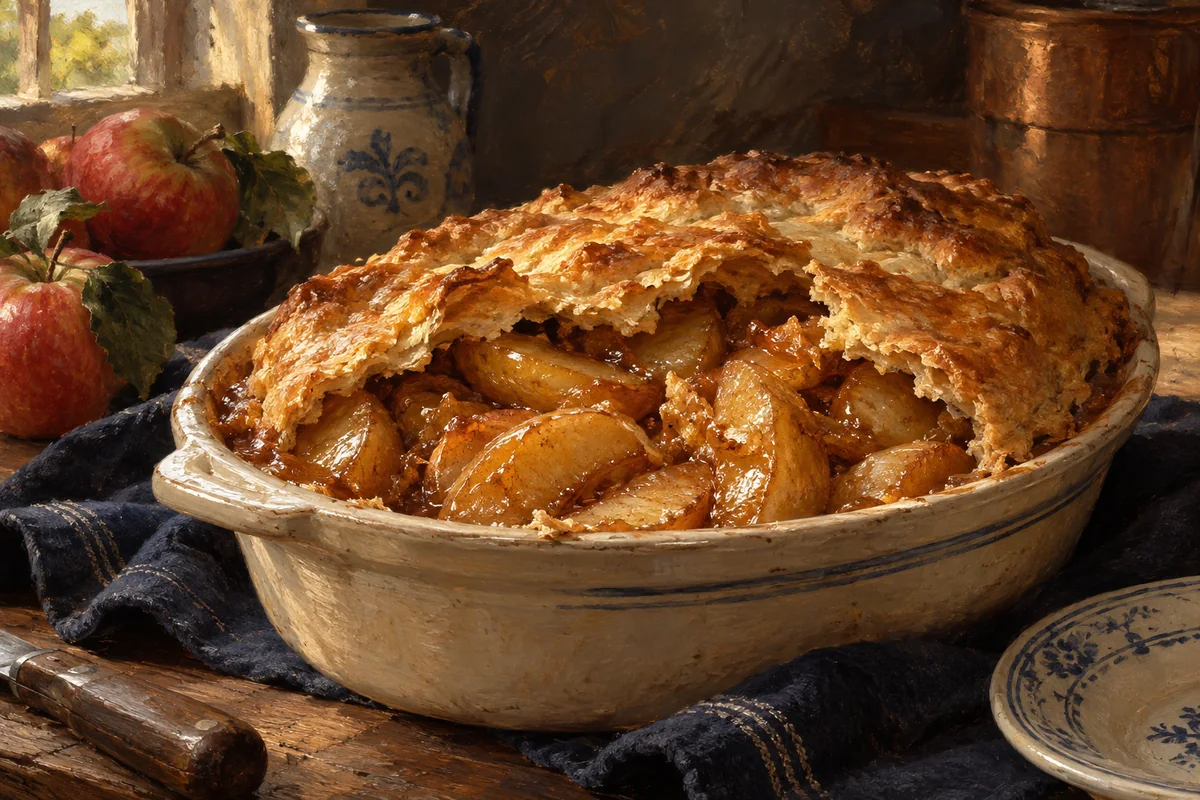
Apple pandowdy
The best part is breaking the crust.
AT THE TABLE WITH JOHN ADAMS
Choose a meaty cured shoulder: modern packets labelled salt pork often contain mostly fat.
Jump to recipe ↓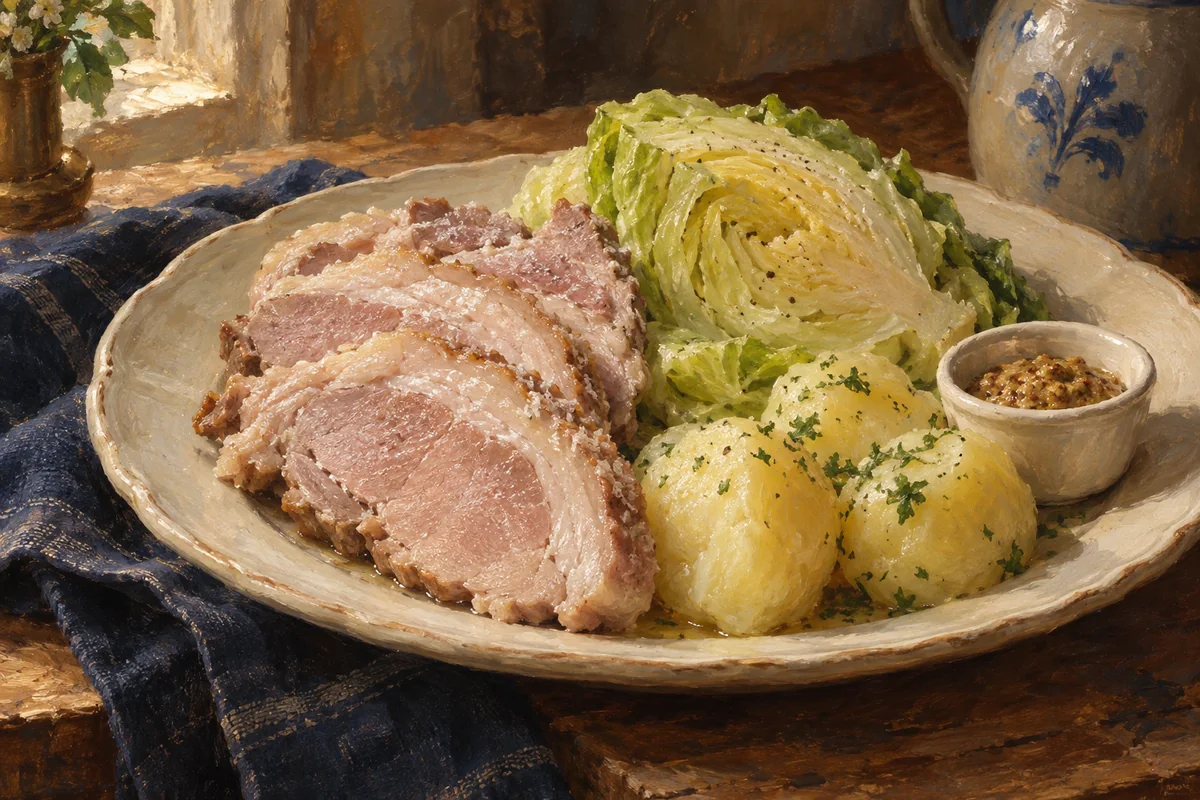
A Massachusetts lawyer, independence advocate and the second president.
Adams’s diary entry for 18 November 1777 records salt pork and cabbage among the dishes at his meal. We use a meaty cured shoulder, then add the vegetables to its cooking broth. The cut matters: very fatty salt-pork belly is not a direct substitute.
On 18 November 1777, John Adams recorded a meal of salt pork and cabbage, roast beef and potatoes, pudding, grog and port. The entry predates his presidency, but it gives us something more useful than a modern list of favourites: a meal he actually ate.
John Adams diary, 18 November 1777; New England culinary context.
APRON ON. HISTORY CAN WAIT.
Our home adaptation · Serves 4 · Not yet kitchen-tested
Check the pork label. If soaking is required, follow its instructions in the refrigerator. Do not add salt to the cooking water.
Put pork, onion, bay and peppercorns in a pot. Cover with fresh water, bring just to a boil and skim. Cover partly and simmer gently for 75–100 minutes, until tender; raw whole pork must reach at least 63°C / 145°F and rest 3 minutes, or follow a higher package temperature.
Transfer pork to a covered plate. Taste the broth; dilute if salty. Simmer potatoes in the broth for 10 minutes, then add cabbage and cook 15–20 minutes more until tender.
Slice the pork. Serve with drained vegetables, a spoonful of broth and mustard.
A modern home recipe with practical ingredients and measured quantities.
Metric and US measures are approximate equivalents. For baking, use weights when you can.
STAY FOR ANOTHER COURSE